Manchester Metrolink: the tram network, plainly explained
Fares, lines, tickets, and the practical stuff you actually need. Metrolink is the best public transport in the UK outside London if you use it properly.
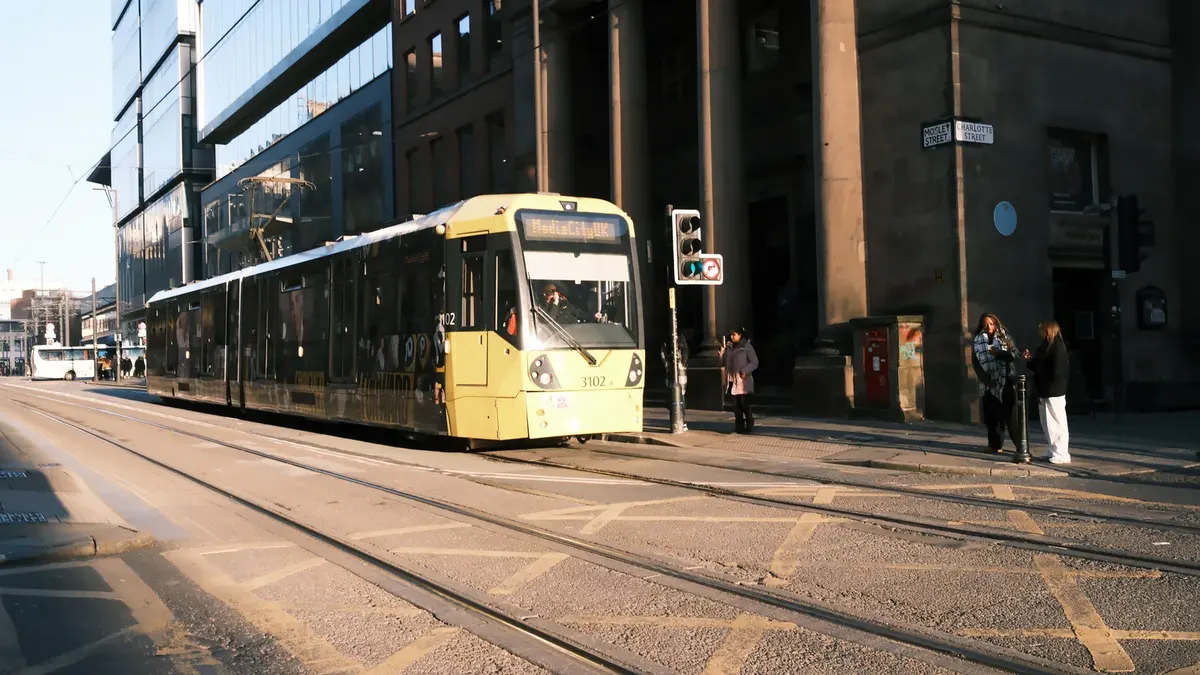
Manchester’s tram network, Metrolink, is one of the best in the UK outside London. If you are visiting for a few days, it is the way to get around. Here is how it actually works.
The lines
Metrolink has eight lines, all colour-coded on the maps, all radiating from central Manchester. The ones you are most likely to use:
Eccles / MediaCity line for Salford Quays and the BBC.
Altrincham line for Old Trafford, Sale, and Altrincham.
Bury line north through the Northern Quarter and out to Bury.
East Manchester line for the Etihad Stadium.
Ashton line east through Piccadilly and out to Ashton-under-Lyne.
Ticketing
Get the Get Me There app and pay contactless via your phone. Cheaper than paper tickets and no faff.
Alternative: contactless card at the tram stop reader. Tap on at the stop, tap off at the stop, done. Same fare as the app.
Paper tickets are still available at machines on every platform but they cost more.
Zones and fares
The city is split into zones. Central Manchester is Zone 1. Chinatown, Piccadilly, Deansgate: all Zone 1.
Zone 1 single: £1.60
Zone 1 to Zone 2 single: £2.30 (covers most airport-adjacent destinations)
Zone 1 all day: £3.50
Zone 1 to 4 all day (whole system): £6.30
If you are hopping around for a day, the day cap is cheaper than three singles.
The airport connection (with a warning)
The tram to Manchester Airport exists but takes 55 minutes and requires a line change at Cornbrook. It is cheap (£4.90) but slow. The train from Piccadilly is faster, cheaper, and easier.
What times it runs
Weekdays: 5:30am to 12:30am roughly. Every 6 to 12 minutes at peak, every 12 to 15 minutes off-peak.
Sundays start later (about 7am) and end similarly late.
Late-night gigs at the AO Arena are generally within tram running hours, but if the show overruns, you may be walking.
The main stops you should know
St Peter’s Square for the city centre and Deansgate connections.
Piccadilly Gardens for the Northern Quarter and Chinatown.
Piccadilly (rail station) for onward trains.
Victoria for AO Arena and Manchester Cathedral.
Deansgate-Castlefield for canal walks and Castlefield Basin.
Old Trafford for the football and cricket grounds.
Trafford Bar for the fast walk between the two stadiums.
Cornbrook for changing lines.
MediaCity UK for the BBC and ITV.
Etiquette
- Board through any door, not just the front.
- Move down the tram at peak times.
- Do not eat hot food on the tram; it is against the rules and people notice.
- Bikes are allowed but only at off-peak times and there is limited space.
- Buggies and wheelchairs are catered for at every stop; use the middle section.
What to avoid
The tram network gets stretched on match days and event nights. If it is a big Etihad or Old Trafford match, walk one stop back before joining the queue.
The night after Manchester Pride, arena weekends, and NYE: allow extra time or plan an Uber home.
The cost comparison
For central Manchester travel, the tram is cheaper than any ride-hail app. £1.60 vs £8+ Uber for the same central journey.
For longer trips (Old Trafford, MediaCity), it is still cheaper. Uber-only makes sense at night or with heavy luggage.
Where to stay
Central Manchester stays (our Chinatown apartments) put you five minutes’ walk from Piccadilly Gardens, meaning you rarely need the tram at all. St Johns Manor in Old Trafford and Rolls Crescent in Hulme both have tram stops within a 15-minute walk. All work well as a base for tram-first exploration.